中文

中文

Identification of Sustainability Issues

In regards to stakeholder communication and management, the Group makes use of multiple channels to disclose information, ensuring smooth and effective communication with key stakeholders. We put into consideration social mores and the rights and interests of interested parties, while pursuing sustainable operations and profits. We pay follow topics regarding the environment, society, and corporate governance, actively trying to fulfill corporate social responsibility in the course of business operations, so as to meet international trends for sustainable environmental protection, social welfare development and contribute to the economic development of the company.

Identification of Material Issues

Materiality Analysis Process

1. Set Objectives Purpose and Principle

Purpose and Principle
CHC identifies material topics to ensure that its management approach reflects both business operations and stakeholder concerns. This process also enables stakeholders to understand the Company’s sustainability strategy and performance outcomes.
In 2024, CHC officially adopted the Double Materiality Principle, in accordance with the GRI Standards and industry trends. This involves a cross-evaluation of:
  • Topics with significant impact on the Company’s business development and performance.
  • Topics where the Company’s activities have a substantial impact on the economy, society, or environment from the perspective of key stakeholders.

2. Identify and Refine Issues

Issue Collection
The Sustainable Development Office compiled a list of sustainability issues by referencing stakeholder feedback, international ESG benchmarks, ISO 26000 guidelines, and best practices from leading companies. A total of 47 sustainability topics were initially identified.
Issue Refinement
Based on prior-year stakeholder communication results, current operational conditions, and potential future developments, CHC refined this list down to 14 key sustainability topics.

★ Note: Core topics such as “Ethical Business Conduct,” “Regulatory Compliance,” and “Financial Performance” are long-standing operational priorities and were not included among the 14 material topics. See sections 2.3, 2.6, and 5.1 for further disclosure.

4. Analyze Questionnaires and Identify Issues

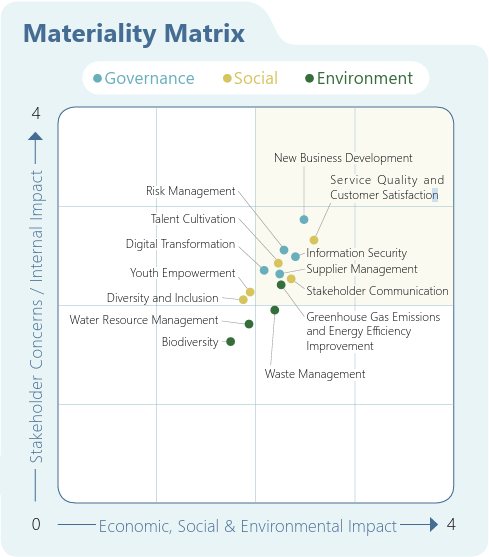
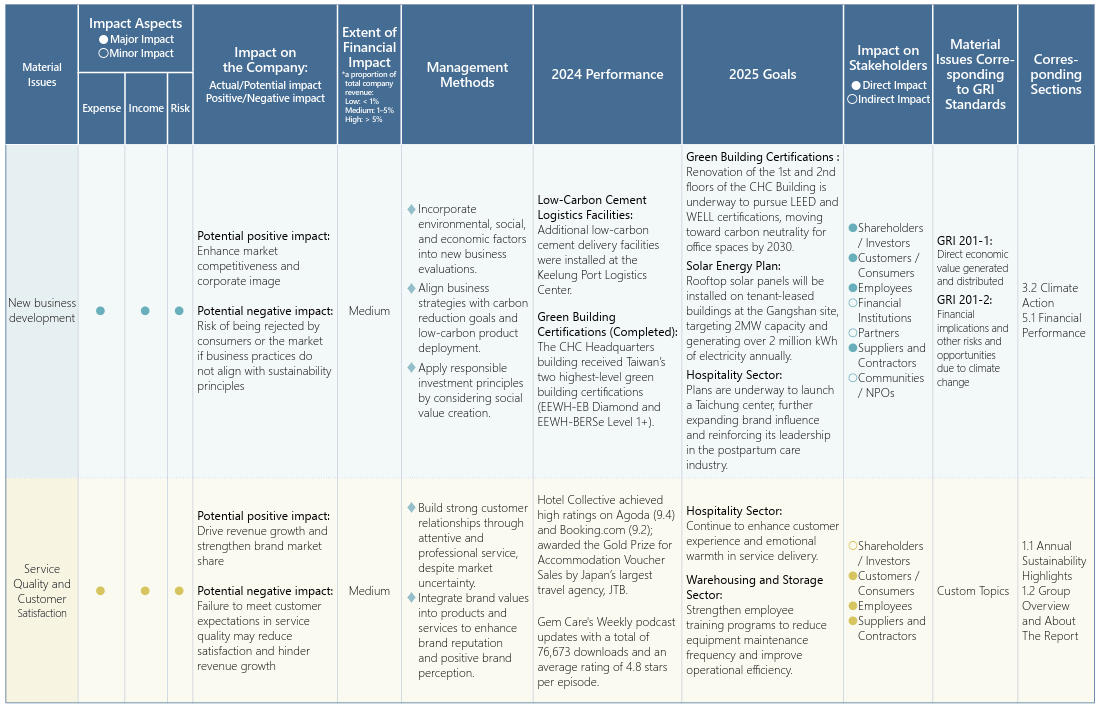
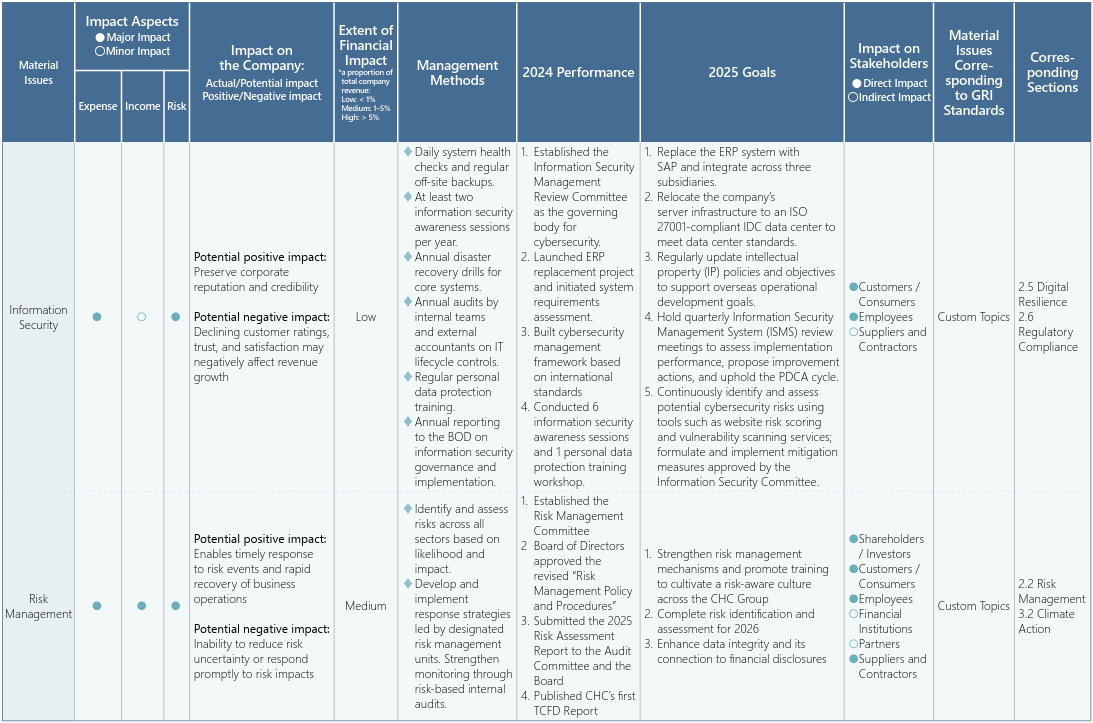
According to the survey results, we conducted analysis by combing "Stakeholder Concerns" and "Internal Impact" on the vertical axis, and placing "External Impact" on the horizontal axis, to develop a materiality matrix.According to the survey results, we conducted analysis by combing “Stakeholder Concerns” and “Internal Impact” on the vertical axis, and placing “External Impact” on the horizontal axis, to develop a materiality matrix. With approval from the CSO, 9 issues falling within the high-score blocks of the matrix (the upper right) were identified as material issues. Related impacts, performance, management strategies, targets, and metrics are disclosed in the table blow.
3. Design and Distribute Questionnaires

Questionnaire Design
The questionnaire design involves conducting a comprehensive survey of key stakeholders to gather their opinions on the Company’s material issues and to assess its impact on the external environment, economy, and society. Company managers assess financial impacts through dimensions of income, expenses, and risk. The survey also includes evaluating employee engagement and customer satisfaction, covering five major aspects to assess the external environment’s impact on company operations.
Questionnaire Distribution
A total of 342 valid responses were received, including feedback from external stakeholders and employees from both domestic and international locations, to broadly investigate their concerns regarding material issues.

Material Issues Management Methods

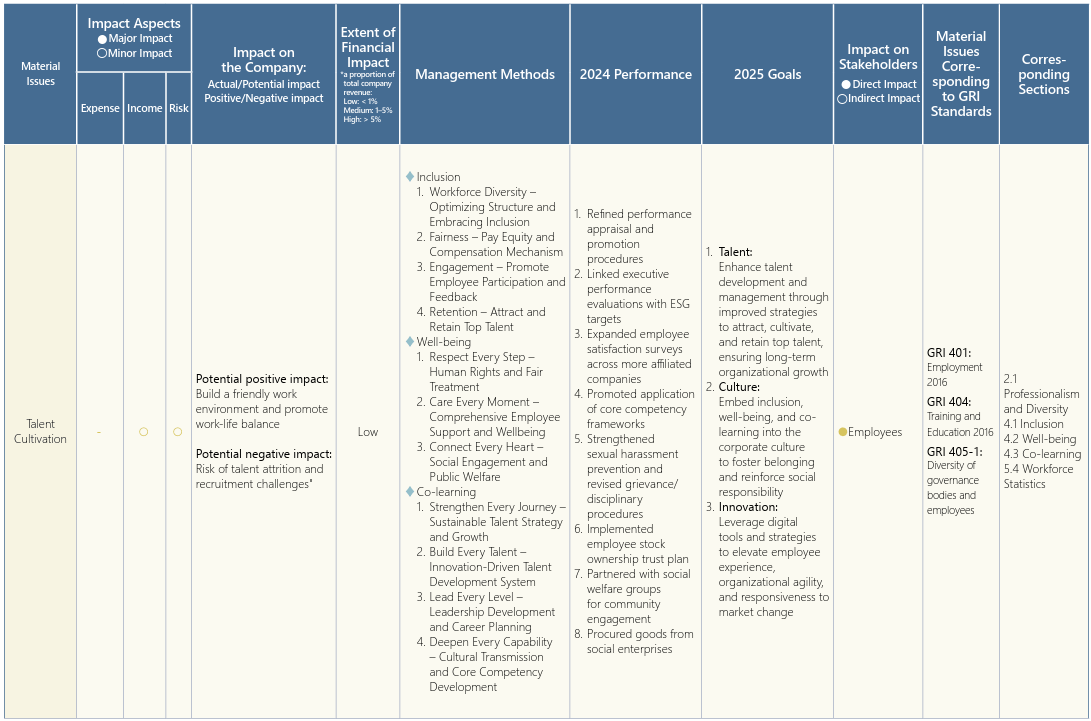
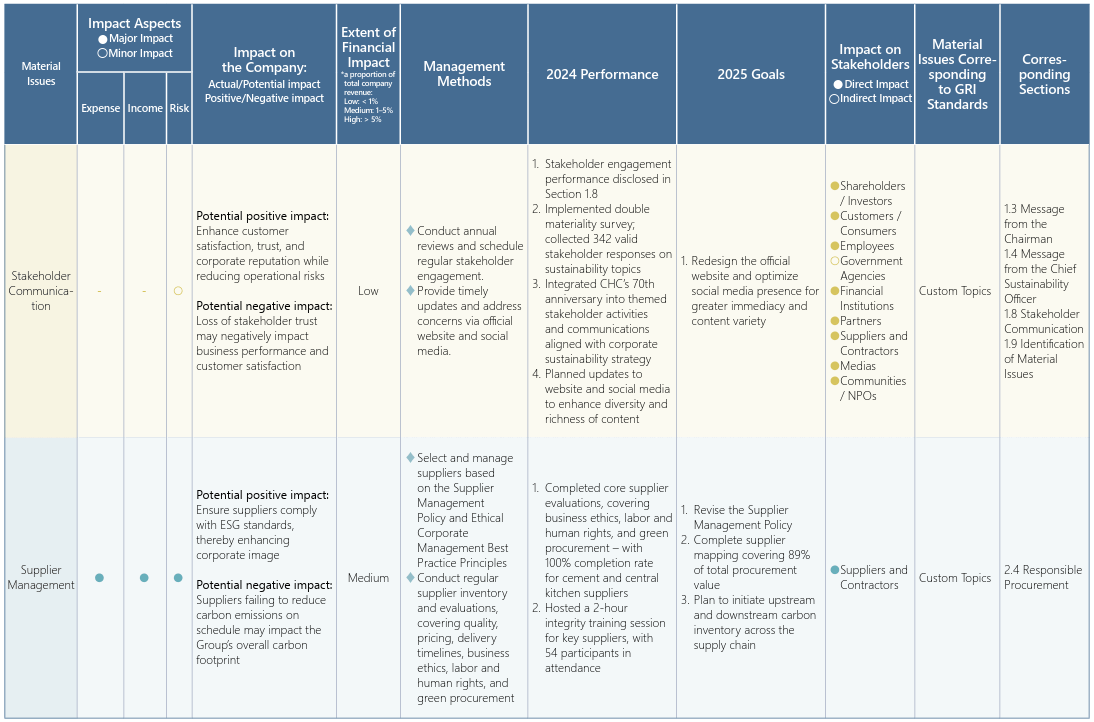
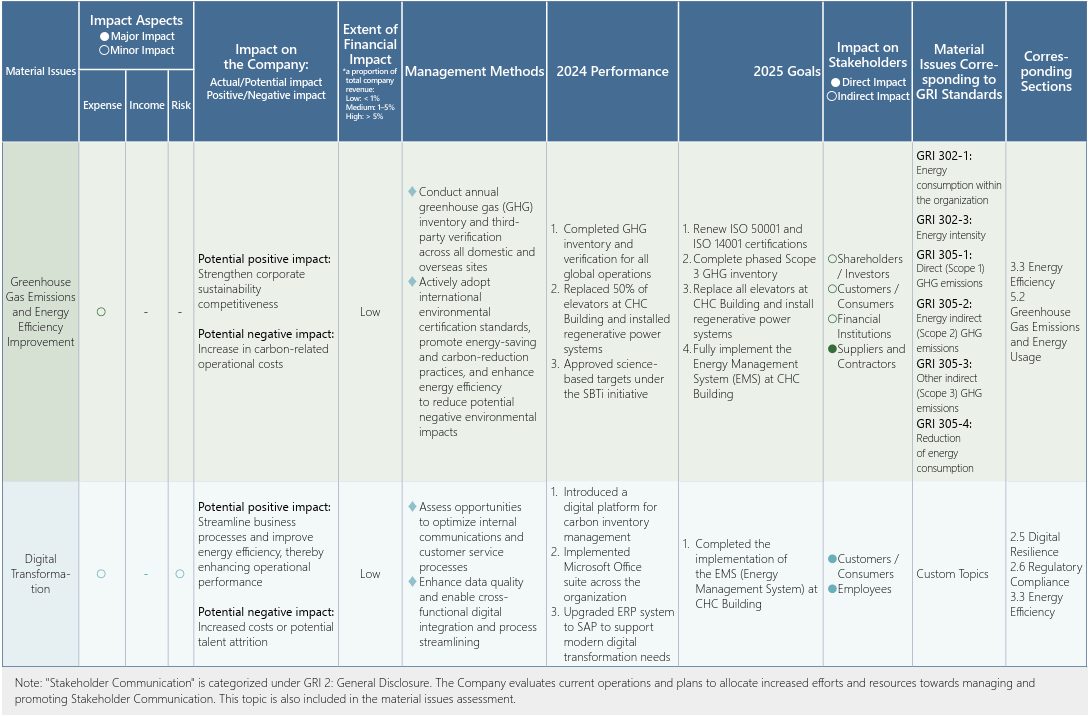
This table outlines the Company’s management approach for nine material sustainability topics. It consolidates the strategic actions and performance outcomes across dimensions such as impact significance, financial implications, and stakeholder concerns. The table presents the 2024 results and the 2025 targets, mapped to the corresponding GRI Standards and report sections. It reflects the Company’s comprehensive commitment to operational risk management, social responsibility, and long-term value creation.