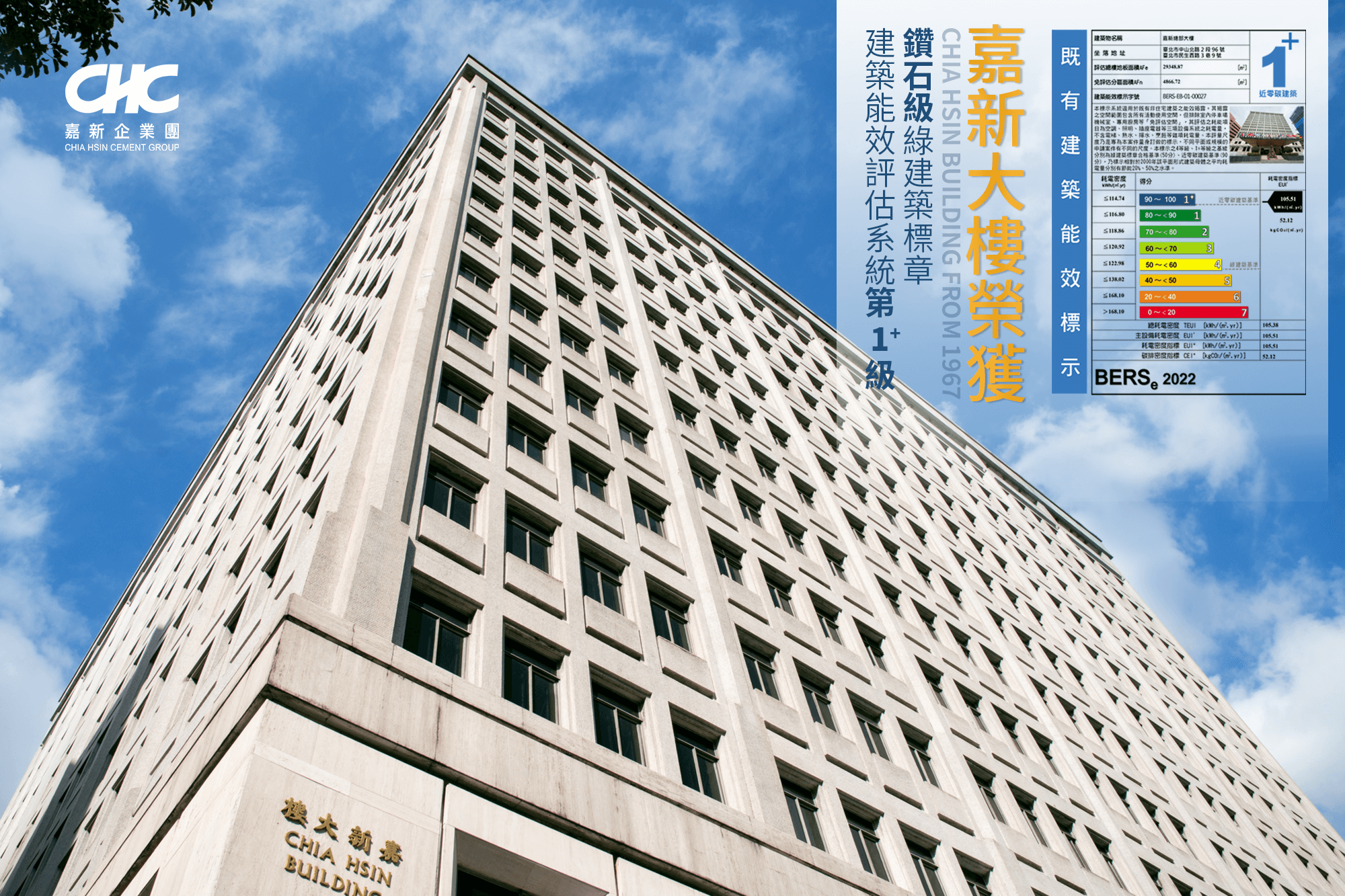
嘉新大樓於1967年落成,是台灣經濟發展歷程中的重要建築地標。當時,大樓採用全台首創的中央空調、雙層隔音鋁窗及複層外牆,提供了最先進的辦公環境典範。時至今日,嘉新大樓不僅依然穩固屹立,更憑藉當年的
Completed in 1967, the Chia Hsin Building has long stood as a landmark of Taiwan’s economic development. At the time, it introduced several pioneering features, including Taiwan’s first central air-conditioning system, double-layer soundproof aluminum windows, and a multi-layer exterior wall system, setting a new benchmark for modern office environments.
More than half a century later, the building continues to demonstrate the lasting value of its forward-looking design. In 2025, it received two of Taiwan’s highest green building distinctions: the EEWH Diamond Green Building Certification for Existing Buildings and the EEWH-BERSe Class 1+ Building Energy Efficiency Certification. The certifications recognize not only the building’s original design quality, but also its ability to meet today’s stringent environmental and energy-efficiency standards and achieve a nearly zero-carbon building rating.
The Chia Hsin Building’s sustainability performance is rooted in a number of design features that were ahead of their time. Its double-layer soundproof aluminum windows and multi-layer exterior walls help reduce noise and cooling demand, while the central air-conditioning system was designed to support balanced energy use throughout the building. Ventilation and natural lighting were also incorporated into the original design to further reduce energy consumption.
Building on this foundation, Chia Hsin Cement launched the Chia Hsin Building Asset Revitalization Program in 2015 to enhance the property’s long-term value and bring its performance in line with evolving green building standards. To date, the Company has invested nearly NT$50 million in upgrades across several areas.
Key measures include:
-
Equipment upgrades and replacement: Air-conditioning and elevator systems have been renewed to improve energy efficiency, while lighting systems have been comprehensively optimized and the number of lighting fixtures reduced.
-
Operational optimization and smart energy management: CHC has implemented the ISO 50001 Energy Management System and introduced an EMS-based smart electricity management system and energy-saving air-conditioning optimization measures. Data analysis and intelligent controls are used to reduce energy consumption and improve operating efficiency, while internal communication and awareness initiatives encourage employees to adopt more energy-conscious practices.
Looking ahead, Chia Hsin Cement has also begun a comprehensive upgrade of its Group headquarters office space this year. The project aims to create a more modern and intelligent workplace centered on healthy building principles, providing employees with a low-carbon, energy-efficient, safe, and comfortable environment that supports both productivity and well-being. The initiative reflects the broader principle of green building: creating healthy and comfortable spaces for people while minimizing the consumption of natural resources and energy and promoting harmony between buildings and their surrounding environment.
According to OECD statistics, buildings constructed before 2005 are expected to account for approximately 80% of global building energy consumption by 2050. In Taiwan, existing buildings account for approximately 97% of the total building stock, yet only a relatively small proportion have obtained green building certification.
Balancing economic development with sustainability therefore remains a significant challenge for businesses. CHC’s approach to asset revitalization extends beyond current renovation efforts. From the forward-looking design of the Chia Hsin Building nearly six decades ago, to receiving the Taipei City Zero-Carbon Benchmark Excellence Award and launching greenhouse gas inventories in 2021, and most recently obtaining dual green building certifications from the Ministry of the Interior in 2025, the building reflects CHC’s continued efforts in energy conservation, carbon reduction, smart management, and environmentally responsible operations.
The dual certifications recognize these long-term efforts while demonstrating how an existing building can continue to improve its environmental and energy performance through thoughtful design, ongoing investment, and systematic management.